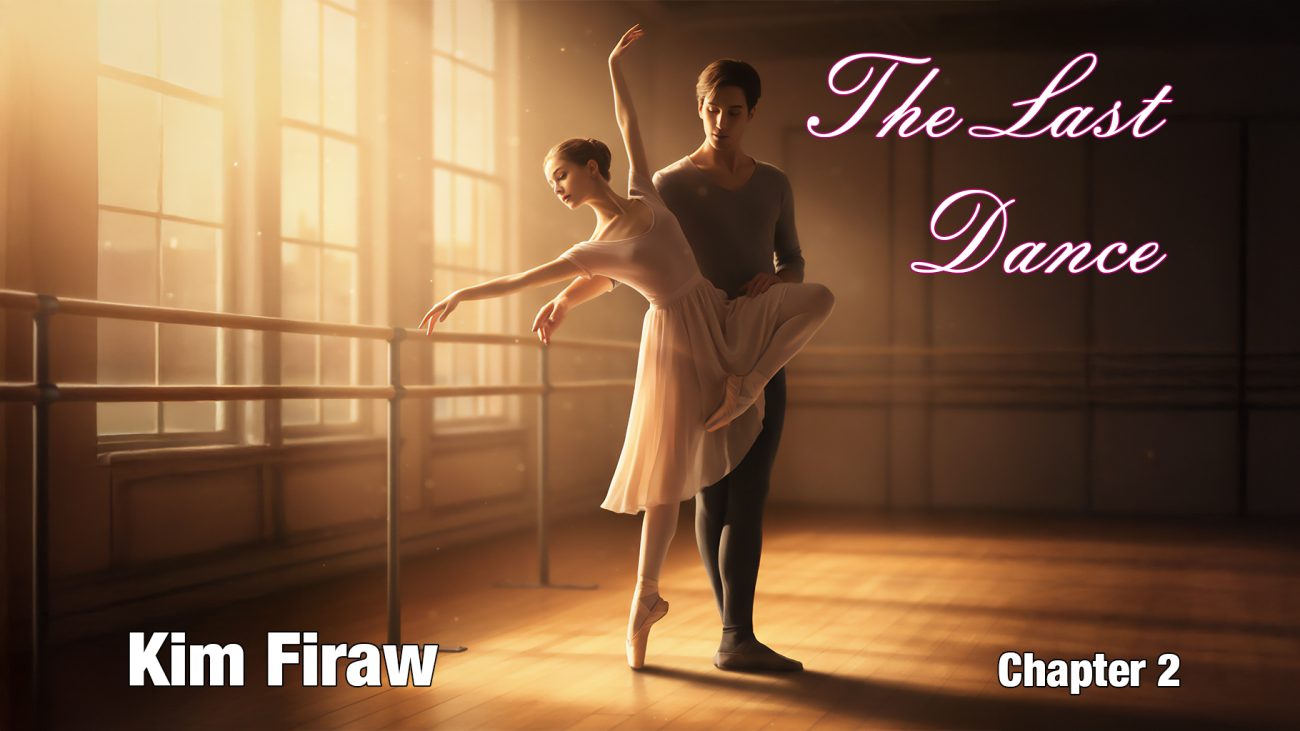
Previously – Chapter 1: Broken Wings
He crossed the road without looking. In Pine Falls that was not the risk it would have been anywhere else.
“Mia Chambers.”
“Hello, Adam.”
And then neither of them had anything, and they stood on a sidewalk outside a florist for a moment while a truck went past.
Up close he had a day of stubble and the lines at the sides of his eyes had gone from the sort you get by squinting to the sort you get by holding your face in a particular arrangement for a long time. He smelled faintly of rosin and washing powder.
“I heard you were coming back,” he said. “Ray Blackburn told the whole of Main Street on Tuesday.”
“Ray Blackburn has asked me to do a benefit.”
“He asked a man last year who’d been in a car commercial.”
“So I’m told.”
Adam laughed, and it was a real one, and it took about ten years off him, and then his eyes went down to the cane and it all came back.
“I’m sorry about your hip.”
“Thank you.”
“I don’t know what that means, really. I don’t know what the injury is.” He said it carefully. “People keep telling me things and I’ve stopped believing any of it, because I know what this town does to a story.”
“Torn labrum. Right side. They repaired it in April and it hasn’t held.” She was surprised at how easy it was to say to him, and less surprised when she worked out why: he was the only person on the street who had ever seen her dance when she was fifteen. “I’m here until it’s better or until it’s clear it isn’t.”
Adam nodded slowly. He did not say it’ll be better.
“Right,” he said instead. “Well. That’s a bastard.”
“It is a bastard.”
“Do you want to come in?”
She had a whole speech ready about that too.
“Yes,” Mia said.
* * *
The lock stuck. He lifted the door by the handle while he turned the key, without thinking about it, the way you do with a thing you have done four thousand times.
“That needs a locksmith,” Mia said.
“It needs a new door. It’s been on the list since 2020.”
Inside it smelled of lemon cleaner and rosin and, underneath, the particular smell of a building with wooden floors that has been warm and cold a great many times.
The lobby had a reception desk with a schedule taped to it, a corkboard with a great many layers of paper on it, a plastic tub of odd shoes, and a chair with a cushion on it that did not go with the chair.
“Mrs. Fletcher’s,” Adam said, following her eye. “She does the desk on Tuesdays and Fridays and she has strong feelings about lumbar support.”
“Who’s Mrs. Fletcher?”
“You’ll meet her. She’ll tell you she knew my mother.” He put the water bottle down. “Everyone in this building will tell you they knew somebody.”
The studio was through a doorway on the left, and Mia stopped in it.
It was not a big room. It was probably forty feet by twenty-six, smaller than any studio she had worked in since she was nineteen, and it had a mirrored wall and a barre on two sides and five tall windows facing west, and the floor was pale maple, sprung the old way, which is to say not sprung at all, just boards on joists over a crawl space.
It was, she thought, a completely ordinary small-town dance studio, and there were about thirty thousand of them in the country, and she had begun in one.
She went in.
That was a mistake, and she knew it about two steps in, because the floor gave her back the sound of her own feet and the sound was the sound. Every room she had ever worked in had made it. It did not matter that this one was small.
She put her free hand on the barre.
“You all right?”
“Fine.” Her voice came out normal. “How old’s the floor?”
“The building’s 1938. The floor’s whatever they put in when it was a furniture place, so, God knows.” Adam came and stood a little way off, hands in pockets. “It’s got a soft patch by the second window. We put a rug over it for about a year and then we took the rug away because the rug was worse.”
We.
Mia looked around the room properly.
There was a stereo on a shelf with a phone cable taped to it. There was a laminated sign that said NO OUTDOOR SHOES and another that said PLEASE DO NOT HANG ON THE BARRE, in two different handwritings. There was a low bench along one wall with a pile of folded costume fabric on it, and above the bench, framed, a photograph of about thirty children on this floor in blue and white with a woman kneeling at the front.
Mia did not go over to it.
“That’s the second year,” Adam said. “That’s the one where we did the thing in the park.”
“Adam.”
“Sorry.” He rubbed the back of his neck. “I do that. People come in and I give them the tour and about a third of it is a woman who isn’t here, and I’ve been told about it, and I still do it.”
“Told by who?”
“Her mother.”
There was a silence in which Mia decided, in the space of about two seconds, that she was not going to say I’m so sorry about Heather on a Thursday morning in a room like this, because it was a sentence for a different kind of room.
“Show me the office,” she said instead.
The office was six feet by nine and had a desk, a filing cabinet, a wall calendar, and a spider plant that was doing better than it had any right to. There was a paper ledger open on the desk, an actual hardback ledger with a red spine, and on the cover somebody had written LOCKWOOD DANCE ACADEMY in silver marker with a small heart over the second D.
Mia looked at it for slightly too long.
“That’s not how anybody does books,” she said.
“No.”
“You know that.”
“I bought software,” Adam said, “in about the second year. It’s on the laptop. I’ve never opened it.”
He said it lightly, as a joke about himself, and it was not one, and they both let it go past.
* * *
He showed her the rest of it because there was nothing else to do with the next four minutes.
A corridor with a bulletin board and a fire-drill notice. A changing room the size of a generous closet, with hooks instead of lockers and a bench that had plainly been a church pew. A supply closet with a mop bucket, boxes of costume fabric and a stack of risers borrowed from the high school in 2021 and never returned.
At the end of the corridor there was a door with a bolt on it.
“Basement,” Adam said. “There’s a stopcock and about four hundred spiders. I go down about twice a year and regret it.”
“Does it flood?”
“It got damp in the spring.” He shrugged. “There’s a gutter on the north side that overshoots. Don Wilcox has told me about it four times.”
Mia put her weight on the boards by the second window and felt them give.
“Soft enough that I don’t put the teens’ jumps at that end,” Adam said, “and I don’t tell anybody why. It’s on the list under the door.”
“How long’s the list?”
“The list,” said Adam, “is a document.”
* * *
She asked him what the classes were, because it was the only question available that was not about a dead woman, and he told her, and it took nine minutes, and it was the first time all morning that he sounded like a person rather than a person being careful.
Eleven classes a week. The Tuesday and Thursday beginners, which he taught himself and described in a completely different voice. An adult class on Thursday evenings with six people in it that he plainly adored. A Saturday morning that was the biggest and the most chaotic.
“Ninety-one on the books,” he said. “It was a hundred and forty in 2022.”
“What happened in 2022?”
“Heather was alive in 2022,” Adam said.
He said it flatly, as a fact, in the way you’d give a date, and then he seemed to hear it, and turned away and started coiling a cable that did not need coiling.
Mia looked at the west windows.
“You’ve got the four o’clock coming in,” she said, “in about five hours.”
“About that.”
“And it’s just you.”
“There’s a woman who does modern on Wednesdays and Mrs. Fletcher does the desk twice a week and Lucy Henshaw does my accounts for free and will deny it.” He shrugged. “So, no. It’s just me.”
“Tell me a good one,” she said.
“A good what?”
“About her.” Mia was looking at the framed photograph of thirty children in blue and white. “You’ve given me three sad ones in twelve minutes and you keep apologizing for it. Tell me a good one and then we can both stop.”
Adam stood in the middle of the floor with his hands in his pockets.
“Right,” he said. “The bees.”
“The bees.”
“Second year. She decides the seven-to-nines are going to be bees for the spring thing, and she goes to Everett and buys six yards of yellow fabric, and she can’t sew.” He had started to smile without noticing. “She can’t sew at all. She’s never sewn anything. And rather than tell anybody this, she spends four evenings in that office with a stapler.”
“No.”
“A stapler. Eleven costumes. And they look fine, they genuinely look fine, right up until the third number, when a child called Aaron Deakin does a jump and comes apart in front of a hundred people.”
Mia had put her hand over her mouth.
“He’s fine. He’s completely fine, he’s got shorts on. But there’s yellow fabric on the floor and a boy in his shorts, and the room’s going, and Heather comes out from the side with the microphone and says, in front of everybody, absolutely deadpan: And that concludes the life cycle of the bee.“
Mia laughed until her hip hurt.
“They still talk about it,” Adam said. “There are people in this town who have never seen anything else we’ve done and they know about the bee.” He was still smiling. “She got a sewing machine that June and she never used it. It’s in the closet.”
“That’s a good one.”
“That’s the best one,” Adam agreed, “and I haven’t told it since 2022, and it turns out I can, so thank you.”
* * *
Mia had, at that point, a very clear opportunity to say something enormous, and she felt it arrive, and she looked at it, and she did not do it.
“I should go,” she said. “I’ve walked further today than I’m supposed to and my mother will have called someone.”
“Right. Yes.” He walked her out. At the door, with his hand on it, lifting it slightly out of habit, he said: “Mia. Would you come back?”
“To what?”
“I don’t know.” He looked genuinely at a loss. “That’s not a good offer, is it. I haven’t got anything to offer. I can’t pay anybody. I just.” He stopped. “There’s about eleven kids in the Saturday class who are better than I know what to do with, and I’ve been running them for two years on what I remember, and I remember it from watching.”
“Adam.”
“Just come and stand in the room,” he said. “That’s it. That’s the whole ask. Come and stand in the room and tell me what you see.”
Outside, a car went past. Somewhere down the street somebody was reversing a truck.
“Saturday’s the big one?”
“Saturday’s the big one. Ten to twelve.”
“I’ll think about it,” Mia said, and walked home, and thought about almost nothing else.
* * *
Patricia had a tuna casserole in and did not ask where she’d been for four hours. It was so unlike her that Mia eventually cracked and told her, over dinner, in a tone she tried to keep neutral and failed.
Patricia put her fork down.
“His studio.”
“It’s a nice room.”
“Mia.”
“What.”
“Nothing.” Patricia picked the fork back up. “I think it’s a nice idea. I think you should be careful.”
“Of what?”
“Of a man who’s been on his own for two years being extremely glad to see somebody.” Patricia ate a piece of fish. “And of you, going into a dance studio in September, when the physical therapist in Everett is going to tell you on Monday what you can and can’t do, and you’ll want to have decided before she says it.”
Mia opened her mouth.
“I’m not saying don’t,” her mother said. “I said the opposite of don’t. I’m saying that in this family we decide things and then find reasons, and I did it, and my mother did it, and you have done it in a very expensive way twice.”
“That’s not fair.”
“It’s completely fair,” Patricia said. “There’s rhubarb.”
* * *
Sasha Nguyen’s clinic was in a low brick building in Everett next to a dental practice, and the room had a plinth, a mirror, a set of resistance bands hanging on a hook like ties in a closet, and a poster of the hip joint that Mia had come to hate on sight.
Sasha was about forty, small, with reading glasses pushed up into her hair, and she read the notes from Chicago for four full minutes without saying anything. Mia found the silence so unbearable that she started talking twice and was silenced both times by a raised finger.
“Right,” Sasha said at last. “Two questions before we start, and I want the true answers, not the ones you’ve been giving in Chicago.”
“All right.”
“On a scale you’re going to hate, how much does it hurt on an ordinary day when you’re not doing anything?”
“Three.”
“And when you’ve been on it?”
“Six. Seven at night.”
Sasha wrote both down without comment.
“Second question. Who have you told?”
Mia looked at her.
“Told what?”
“Any of it. The diagnosis, the surgery, what you’re actually afraid of.” Sasha did not look up from the notes. “You’ve got a mother, I assume, and a friend, because everybody’s got a friend. Which of them knows the real numbers?”
“My mother knows I’ve had an operation.”
“And the friend?”
“The friend asked me if I was allowed to be furious about it,” Mia said, “which is more than anybody in Chicago managed in fifteen weeks.”
“Then talk to the friend,” said Sasha, “because I’m going to give you about nine facts today and you’ll carry them home and put them in a drawer, and in about four months they’ll come out of the drawer all at once, usually in a parking lot.”
“Take your shoes off,” Sasha said, “and lie on your left side, right leg on top, knee bent, and don’t help me.”
The examination took twenty-five minutes.
It was, Mia understood afterwards, the first proper one anybody had done since the surgery. In Chicago there had been a physical therapist attached to the company who had eighteen dancers and four hours a day, and who was very good and entirely overwhelmed, and who had given Mia a printed sheet and a slot on a Tuesday.
Sasha measured things and wrote them down. She put a hand on the front of the hip and asked Mia to lift the leg and watched, not the leg, but the opposite side of Mia’s pelvis. She asked her to stand and then walk the length of the room four times and did not comment. She had her sit on the edge of the plinth and hold her own knee and then, at the very end, put two fingers on the outside of the joint and moved the leg through an arc of about thirty degrees, slowly, and stopped at a point that made Mia’s breath go.
“There,” Sasha said.
“Yes.”
“How long has that been there?”
“That’s new. That’s the last three weeks.”
Sasha wrote that down as well.
Then she sat on a wheeled stool and rolled back about four feet and took the glasses out of her hair. Mia would come to learn that this was the thing she did when she was about to be honest.
“Tell me what you’ve been told,” she said.
“That the repair’s good. That I’m on track. That I should be doing the sheet twice a day and that we’ll reassess in the autumn.”
“Who told you you were on track?”
“The surgeon’s office. On the phone.”
“On the phone,” Sasha said, without inflection, and wrote that down too. “Right. Here’s what I’ve got, and then you can ask me anything, and I’ll tell you when I don’t know. That will happen at least twice.”
She held up a hand and went through it on her fingers.
“The repair is holding. That’s real and it’s good and I’m not going to take it off you. Your range in flexion is about seventy percent of the other side. At four and a half months that’s unremarkable. Your abductors on the right are extremely weak. That’s normal after this surgery and it’s fixable, and I’d expect to get most of it back in three or four months of work you will find humiliating and boring.” She folded a finger down. “Your gait is the thing I actually care about. You’ve built a compensation pattern to keep load off the front of that joint and you’ve been walking on it since about May, and it’s now feeding into your left knee and your lower back, and if we do nothing else in the next six weeks we’re doing that.”
“And the pain at the end of the arc.”
“That’s the one I don’t like,” Sasha said.
Mia’s hands had gone flat on the plinth.
“Say why.”
“Because I don’t know what it is, and because it’s new, and because new things at four and a half months are usually mechanical and occasionally not.” Sasha put the glasses back in her hair. “It could be soft tissue and irritation. That’s most likely, and it’s the sort of thing that settles with load management. You’ll get flares. A flare is soft tissue telling you it has had enough, and it is not damage, and you will not be able to tell the difference at the time, and neither will I until it settles. It could be that you’ve got some cartilage change in there that didn’t show or wasn’t mentioned. I’m not a radiologist and I’m not going to speculate at you, because if I speculate you’ll take it home and live in it.”
“Everybody keeps not speculating at me.”
“Yes,” Sasha agreed. “That’s because we don’t know, and because the alternative is that somebody says a word to you in an office and you build a house on it.”
Mia sat on the edge of the plinth in a room in Everett with a poster of a hip joint on the wall.
“Can I ask you the question,” she said.
“You can ask me the question.”
“Will I dance again.”
Sasha did not look away and did not hesitate.
“I don’t know,” she said. “That’s the honest answer and it’s going to stay the honest answer for a while, and anybody who gives you a different one before Christmas is guessing. What I can tell you is that people your age with your surgery and your history split about three ways, and the group that does best is the group that does the boring work early and doesn’t test it. And the thing that puts people in the bad group, in my experience, more than the injury, is going and finding out.”
“Finding out.”
“Getting on a floor and seeing what’s left.” Sasha rolled the stool forward. “Everybody does it. Every single one. Usually about month five, usually alone, usually at night, and about a third of them undo two months of work in seven seconds.”
Mia looked at her shoes on the floor.
“What if I’m in a studio,” she said, “twice a week, from Saturday. Not dancing. Watching.”
Sasha considered this for a moment.
“Watching is fine. Standing is not, past about twenty minutes at a stretch. Demonstrating is not.” She wrote something. “And you have just asked permission for a thing you had already decided to do, and that I don’t mind, and that you should notice you did it.”
“My mother said something similar the other night.”
“Then your mother and I are going to get on,” Sasha said. “Right. Take the sheet. Twice a day, and the second one is the one that matters, and I’ll know.”
* * *
In the parking lot afterwards she sat in the driver’s seat with the door open and her feet still on the asphalt and got her phone out.
There were three messages. One from Lucy that said WELL?. One from her mother that said Don’t rush back, there’s meatloaf. And one, sent at 8:41 that morning, from a number she had not saved and recognized instantly because there was only one person it could be.
No pressure at all and please ignore this. Saturday is 10-12. If you’d rather not I will never mention it again and I’ll still be very glad you came in on Thursday. A.
Mia read it four times.
It was, she thought, a genuinely well-written message. He had given her the door twice in three sentences.
She typed I’ll be there and deleted it. She typed Let me see how the week goes and deleted that too, because it was a lie with a hinge in it, and because she had been telling herself lies with hinges in them since June and had just spent twenty-five minutes being examined by a woman who could apparently see them from four feet away.
I’ll be there at 9.20, she sent. I need to be sitting down before anybody arrives.
The reply came before she had put the phone down.
There’ll be a chair.
* * *
She drove back over the pass with the window cracked and the radio on and her right leg braced against the floor at every downhill.
The group that does best is the group that doesn’t go and find out.
At the turning for Pine Falls, Mia thought about a small room with five west windows and a soft patch by the second one, and eleven children on a Saturday who were better than a decent man knew what to do with.
She thought: I’m only going to stand in the room.

2 thoughts on “The Last Dance – Chapter 2: The Room”