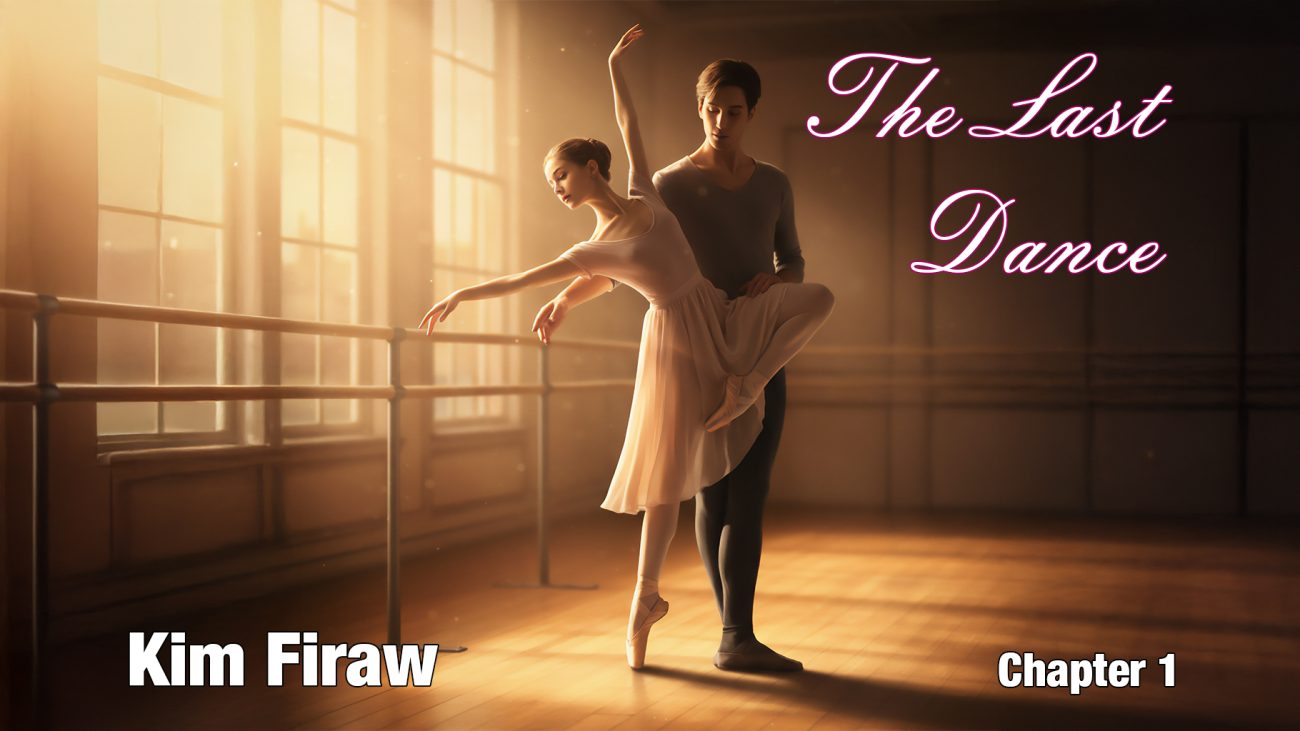
Nobody had told her about the accelerator.
They had told her about stairs, and about getting out of low cars, and about the first six weeks, and about a hundred exercises with names like clamshell that she was to do lying on a mat on a floor. Eleven professionals in two states had spoken to Mia Chambers about her right hip since March sixteenth, and not one of them had mentioned that you press an accelerator with your right foot, and that the muscle that lifts your foot off it runs up through the front of the hip, and that after four hours the whole leg is a wire from ankle to waist, and that this is true again on the second day, and worse on the third.
She had left in 2009 with two bags and a place at a company in Detroit. She was coming back in a rental with nine weeks of physical therapy behind her, a printed exercise sheet in the door pocket, and a suitcase in the trunk that she was not going to be able to lift out.
Six months, she told herself. Maybe eight. Then Chicago, or somewhere, or something.
She had been telling herself that since June thirteenth, and it had gone smooth from handling.
The apartment in Chicago had gone on August first. That was the part she had not told anybody, including her mother, including Lucy, and it was not a dramatic fact: the lease had ended, and renewing it would have cost nineteen hundred dollars a month for a place she would not be living in, and a sensible woman had made a sensible decision on a Tuesday.
Everything in it was now in a storage unit off Cicero Avenue, in boxes, apart from four pairs of pointe shoes. Those were in the trunk of this car, under the suitcase, in a shopping bag, because she had been unable to put them in a box and unable to throw them away and had therefore driven them two thousand miles.
She was aware of them at every set of lights.
At Marysville she pulled into a gas station and did not get out for four minutes, and then did get out, and stood in the sun with her hand on the roof of the car and did the arithmetic, which was her own word for it: the wordless calculation a person does about how far it is to a door.
Forty feet. Two curbs. A step up into the store.
She got herself a bottle of water and a bag of pretzels she did not want, and a woman at the register said, “You all right there, honey?” in a tone that made it clear she had been watching her cross the lot, and Mia said, “Long drive,” and smiled, and got back into the car and sat with both hands on the wheel for a while.
Then she drove the last forty-one miles.
By the time she came off the highway onto the Pine Falls road she was bracing her right hand on the seat to take some of her own weight off herself.
The sign said PINE FALLS 5 MILES and leaned slightly, the way it had leaned since about 1998.
Mia slowed for it. She had been dreading the sign since Montana, and now it was just a sign, half in the grass, with a rust bloom coming through the paint under the F.
Right, she thought. There it is. Nothing happened.
She drove on.
The rented sedan went over the bridge at the Pine River and the tires changed note, that hollow drumming that had been the sound of coming home since she was six, and Mia noticed that her eyes had gone hot and dealt with it by turning the radio on and then immediately off again.
Early September, and the maples along the roadside had two or three red leaves each, the way a room looks when somebody has started to change the decoration and been interrupted.
* * *
Her mother’s cottage sat at the end of a lane on the river side of town, light blue with white shutters, and the porch swing was still there, and there was a hanging basket that had not been watered.
Mia sat in the car for a moment with the engine off.
Then the front door opened. Patricia had been watching from the window, then, and had been watching for some time.
“You’re early.”
“I didn’t stop for lunch.” Mia opened the door and did the maneuver. It took twelve seconds and she had refined it into something almost dignified: left leg out first, both hands on the frame, up in one movement rather than two, and then a pause on the outside of the car with her hand on the roof while everything settled.
Patricia stood on the porch and watched the whole thing and did not come down the steps.
That, Mia thought, was probably an act of enormous restraint, and she was not able to be grateful for it yet.
“There’s a roast,” Patricia said.
“It’s two in the afternoon.”
“It’s in the slow cooker. It’ll be a roast at whatever time you want it to be a roast.”
The living room smelled of lavender and beef stock. It had not changed in sixteen years except in the way rooms do. The photographs on the mantel had gone on multiplying: cousins, a wedding Mia had missed, a baby she could not identify. Her own ballet portraits still hung by the stairs. There were four of them and the newest was from 2016.
Patricia took the small bag off her shoulder before she could object.
“I made your room up. It’s been storage. I’ve put most of it in the garage and some of it’s in the hall and I’m not apologizing for the hall.”
“Mom.”
“There’s a rail in the shower now. I had Frank put it in on Tuesday.” Patricia said this to the middle distance, briskly, in the voice of a woman getting something over with. “I know you didn’t ask. He was here anyway about the gutter.”
Mia looked at her mother’s back.
“Thank you,” she said.
“It’s a rail. It’s forty dollars.” Patricia went into the kitchen. “Sit down before you fall down.”
Mia sat down on the too-soft sofa she would learn over the following weeks to avoid, and looked at the four ballet portraits by the stairs, and thought about the fact that she had not visited for two years, and that in all that time her mother had never once taken them down.
* * *
Lucy came at four, without warning, because Lucy had never in her life warned anybody.
She came through the door with a cardboard tray and a paper bag and her hair doing what it did, and Mia was halfway up off the sofa when Lucy said, “Sit down,” and put everything on the coffee table and hugged her from the side, hard, at an angle that entirely avoided the right hip. She had thought about it in the car, then.
“You look terrible.”
“Thanks.”
“You look terrible in a chic way. Like a woman in a film who has recently been betrayed.” Lucy dropped into the armchair. “I got you the flat white and a maple thing. The bakery’s new, it’s where the video store was.”
“The video store was already gone.”
“It was the thrift store after that. Try to keep up.” Lucy pulled her feet under her. “Right. How long have I got before your mother comes in with a tray.”
“Eight minutes.”
“Then I’ll be quick.” Lucy leaned forward and the performance dropped off her entirely. “How bad is it?”
Mia turned the coffee cup around.
Nine people had asked her that in six weeks and she had a paragraph for it, smooth as a river stone, that involved the words labrum and rehab and we’ll see, and she got as far as the first syllable of it and then found she could not be bothered.
“It’s bad,” she said. “I’ve got a torn labrum in the right hip and they repaired it in April and it hasn’t taken the way it was supposed to. There’s a thing they can see on the scan that they call wear and I’ve noticed that nobody will tell me what it means, which means it means something.” She drank some of the coffee. “I’ve got a doctor here I’m supposed to see, and a physical therapist in Everett twice a week, and if it goes the way they want I might be able to do class again in a year. Not perform. Class.”
Lucy did not say oh, honey. Lucy did not say you’ll be back on your feet in no time.
She said: “Are you allowed to be furious about it?”
Mia laughed, once, and was surprised by the noise.
“I’ve been in eleven waiting rooms,” she said, “and you’re the first person who’s asked me that.”
“Well. There we are.” Lucy sat back. “You are allowed to be furious about it. You’re also allowed to be pathetic about it, and I’m the only person in this town you’re allowed to be pathetic in front of, and I’m going to hold you to that.”
Patricia came in with a tray.
They talked about nothing for a while. It was the correct thing: the bookstore under new ownership, the mayor’s plan for a fall festival, the new traffic circle at the west end that nobody understood. Lucy worked at the pharmacy now, three days, and did the books for two businesses on the side, and had a system involving spreadsheets that she described with the fervor of a woman who has found God.
“You’re happy,” Mia said, when Patricia had gone out for more milk. “That’s disgusting.”
“I’m content. Happy’s for people with something to prove.” Lucy stretched. “I’ve got a house with a leak in it, a job I could do asleep, and a man in Everett I see on alternate weekends who has never once asked me to move in with him, and if he does I’m ending it.”
“Lucy.”
“I’m serious. I’ve had the version where you’re in love and everything’s on fire, I did four years of it, and I’d rather have Thursdays.” She said it entirely without self-pity. “You’re allowed to think that’s small. Everyone does.”
“I don’t think it’s small.”
“You did at eighteen.”
“I was eighteen.”
“You were insufferable at eighteen,” Lucy said fondly, “and I was in love with you in a way I’ve only recently stopped analysing, and you left in a car with two bags and I cried for about a week and then got on with it. So. There we are. That’s my whole thing. Now you’re back and I’m going to be extremely normal about it.”
Mia laughed until her hip complained.
It was only when Patricia went to deal with the roast that Lucy said, “Right. Two things you’ll hear this week and I’d rather you heard them from me.”
“Go on.”
“One. Ray Blackburn is going to ask you to do a benefit.”
“Who’s Ray Blackburn?”
“The pharmacist. Big man, mustache, sponsored the talent show in about 1998. He asks everybody to do a benefit, he asked a man last year who’d been in a car commercial.” Lucy waved it away. “Just say maybe and he’ll leave you alone for two weeks and then ask again.”
“And two?”
Lucy’s face changed.
“Heather Lockwood died,” she said. “Two years ago in April. Cancer. It was about fifteen months from the diagnosis.”
Mia set the cup down.
She had known. That was the strange thing. Somebody had told her in a corridor in Amsterdam in 2023, between a matinee and an evening show, and she had said oh, God, that’s awful and gone to have her hair redone and had not thought about it again with any part of herself that could be held responsible.
“Heather Wilcox,” she said.
“Heather Lockwood. She married Adam about seven months after you left.” Lucy was watching her carefully. “They opened a dance studio on Main. Lockwood Dance Academy, it’s in the old Ingram building, the white one with the windows. She ran it. He did the money. She was, honestly, Mia, she was very good, she got about ninety kids in that place from nothing.”
“And he’s still.”
“He’s still running it. On his own. Two years.” Lucy turned her cup around. “It’s not going well. I do the books for the diner and the hardware place and I’ve heard things I shouldn’t repeat, and I’m going to repeat one of them. There’s a woman coming into the county with money who’s building something out at Crestwood, and everybody who knows anything is very carefully not talking about it.”
“Crestwood’s forty minutes away.”
“It’s twenty on the new road.” Lucy shrugged. “It might be nothing.”
Mia looked at the four photographs by the stairs.
“How is he?” she said.
“Adam?” Lucy considered it for longer than the question needed. “He’s fine. He’s completely fine. He’s polite to everybody and he never talks about it and he’s at that studio at seven in the morning and eleven at night, and about once every four months somebody sees him sitting in his truck in the parking lot for a very long time.” She picked up her coffee. “That’s the answer. I’ve had two years to work on it.”
Patricia came back in and said the roast wanted another hour, and Lucy stayed for all of it.
They ate at seven at the table in the front room. It was the good table, and it was not used, and Mia understood about four minutes in that her mother had decided this was an occasion and had told nobody.
There was a tablecloth. There was rhubarb cobbler, and cobbler takes an hour, so Patricia had started it before Mia arrived, on the assumption that her daughter would want dessert.
“This is very good, Mrs. C.”
“It’s a roast, Lucy.”
“It’s a tablecloth,” said Lucy, and Patricia said “eat your dinner” in a voice that meant she was pleased.
It went well for about forty minutes.
Then Patricia said, “So what happens in six months?” and put the serving spoon down, and Mia felt the whole evening change gear.
“I don’t know yet.”
“Because Marion Deakin says her nephew had a hip and he’s back on the boats.”
“Mom.”
“I’m only saying what she said.”
“Marion Deakin’s nephew is thirty-one and works on a boat,” Mia said, “and I am thirty-four and my job was to put my leg above my own head twenty times a night, and they are not the same injury and they are not the same profession, and I would rather not do this over the rhubarb.”
The clock in the hall.
“That’s fair,” Patricia said.
Mia had not expected that at all, and it was worse than an argument.
Lucy, who had been through sixteen years of this and had a technique, said, “Right, well, I’m having more cobbler,” and had more cobbler, and told a long and largely untrue story about a man who came into the pharmacy about a wasp, and by the end of it everybody was all right again.
At the door, later, Lucy said quietly: “She’s been telling people for two weeks.”
“Telling them what?”
“That you’re coming.” Lucy got her keys out. “Not that you’re hurt. That you’re coming. She told Beverly Ann Wicklow in the line at the pharmacy and I watched her do it and she was about four inches taller.”
At eight Mia went upstairs to a room with her old trophies in it and lay awake for a long time with her hip aching in the particular way it ached after a day of sitting.
She thought about a girl called Heather Wilcox who had been two years below her at school and who had done a cartwheel down the entire length of the hall on the last day of term in 2009.
At about one in the morning she got out of bed and did the exercises.
There were nine of them on the printed sheet and they took twenty-two minutes and she had not done the evening set for three days and had told herself it was because of the drive.
She did them on a towel on the floor of her childhood bedroom, in the dark, under a shelf of trophies, with her knees bent and a resistance band around her thighs, opening and closing her right leg against it fifteen times and then fifteen times again.
It was called a clamshell. A woman with a diploma had given it a name a child would use.
At twenty-two she had been able to hold her leg at a hundred and thirty degrees for eight counts while a man held her waist and eight hundred people held their breath. Now she lay on a towel and opened her knee four inches against a rubber band and by the second set it burned, and by the third her whole right side was shaking, and she did the fourth anyway with her jaw locked.
Then she lay on her back on the floor of her old room and looked at the ceiling and did not cry, and counted that, at one in the morning, as an achievement.
* * *
She walked into town the next morning because if she did not walk into town the next morning she was never going to.
Patricia produced a cane from somewhere. It turned out to be Mia’s grandfather’s, wooden, with a rubber ferrule that had perished, and Mia said she didn’t need it and then took it, and the wrongness of it in her hand lasted about ninety seconds and then stopped, which was worse.
It was three-quarters of a mile to Main Street and it took her twenty-six minutes.
Two neighbors waved. A woman she did not recognize slowed her car to shout that she’d heard, and that she was sorry, and that her niece had done her ACL. A man outside the hardware store held the door for her in a way that made it very clear he had been going to hold it anyway and that this was not about the cane. It was about the cane.
The star returns, Mia thought, and then, because that was self-pity and she had a rule about it before eleven in the morning: stop it.
Main Street had a café now with a chalkboard, in what had been the bookstore. There was a stationery store that sold candles. The Pine Diner had the same neon sign with the same dead E.
And halfway down, between the florist and the accountancy office, there was a store called Star Pointe Dance Supply that had not existed when Mia was seventeen. Its window was full of leotards and tights and, on a small stand at the front, one pair of pointe shoes.
She stopped in front of it.
They were a bad brand. That was the first thing she thought, in the flat professional voice that nine weeks of physical therapy had not touched: those are a bad brand and they’ll be dead in nine hours and some child’s mother is going to pay ninety dollars for them.
The second thing she thought was that there were four pairs of her own in a shopping bag in the trunk of a rental car three-quarters of a mile away, and that she was going to have to deal with them at some point, and that it would not be today.
She stood there long enough that her hip put in a formal complaint, a bright vertical line of it from the joint to the knee, and she turned away too fast and had to put her hand on the window of the florist.
“Mia Chambers! Back in Pine Falls!”
Big man. Mustache.
“Mr. Blackburn.”
“You remember me!”
“You sponsored the talent show,” Mia said.
He was genuinely delighted. He asked about the injury, and made a joke involving the words on your toes, and apologized for it, and made it again. He told her that the town had followed her career, which was probably true of about twenty-five people. And then he said, with the air of a man producing a gift, that the town would love to see her dance at a benefit once she was mended, and what did she think about that.
“Maybe,” Mia said. “In a while.”
“That’s the spirit,” said Ray Blackburn, and went off to tell somebody.
* * *
She kept walking because turning around would have meant walking past the pointe shoes again.
The Ingram building was at the far end, past the town hall, on the corner: white clapboard, tall windows on the street side, a flat roof with a parapet. It had been a furniture showroom when she was small and had smelled of varnish.
There was a sign over the door, hand-painted, dark green on cream:
LOCKWOOD DANCE ACADEMY
It hung slightly crooked. Not much. Two or three degrees, the sort of thing you would fix in the first week or else never fix at all.
Mia stood on the opposite sidewalk for a while.
Through the tall windows she could see a reception desk, and a corkboard, and beyond it a doorway into a studio with a mirrored wall, and a barre, and a floor of pale wood that looked, even from thirty feet away, like a floor that somebody mopped every night.
There was nobody in it. Half past ten on a Thursday in September; the school day had swallowed everybody.
Walk on, she thought.
She had a whole speech ready about why she should walk on, and it was a good speech, and she was still delivering it to herself when the front door opened.
He came out backwards, holding a door wedge, and dropped down onto one knee to kick it into place under the door, and did not look up.
Adam Lockwood was thirty-five now. He was bigger through the shoulders than he had been at seventeen and there was gray at the side of his head, and he was wearing a black T-shirt and sweatpants and he had a water bottle tucked under his arm in the way of a man who has been carrying it for an hour and forgetting to drink from it.
Mia stopped breathing in the ordinary way.
She had been prepared for this. She had, at various points in a two-thousand-mile drive, rehearsed several versions of it, all of which involved her being somewhere else at the time.
He was looking at the wedge. There were five feet of sidewalk and a road between them and he had not seen her, and she could have turned and gone up the side street by the town hall.
A gust came up Main Street and took the door off the wedge and slammed it, and Adam said something, and stood up, and turned around to open it again.
And in the plate glass, before he turned, he saw her.
Not directly. In the window: a woman on the far sidewalk, standing very still, with a cane.
Mia watched him see it. She watched his shoulders change. She watched a man look at a reflection for about a second and a half and work out, from a shape, who it was.
Then he turned all the way around, into the street, into the ordinary Thursday light, and looked straight at her across two lanes of nothing at all.
“Mia?“
